
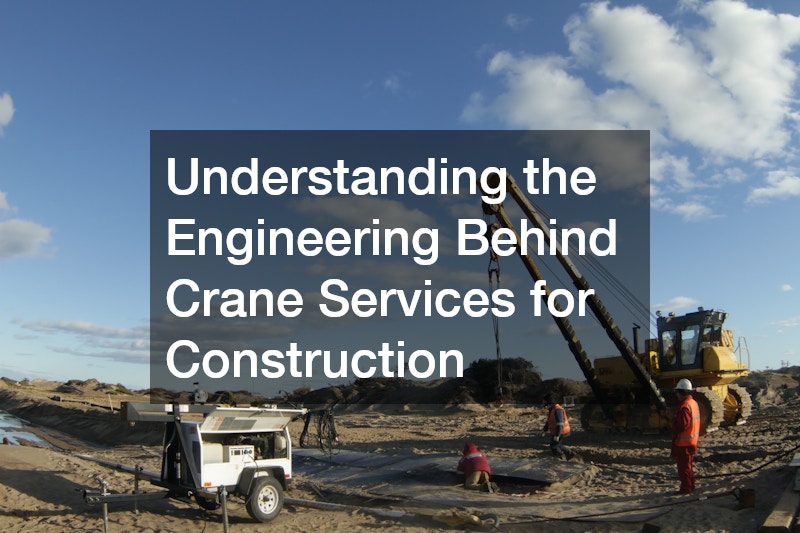
Modern construction projects depend on carefully planned lifting operations to move materials, equipment, and structural components safely and efficiently. While cranes may appear straightforward from the ground, the work behind every lift involves mechanical principles, load calculations, site analysis, and detailed coordination. Understanding the engineering behind crane operations helps explain why proper planning and qualified personnel are essential on complex construction sites.
Load Calculations and Structural Forces
Every lift begins with determining exactly what the crane must handle. Engineers and operators calculate the total load, which can include the weight of the material, rigging equipment, lifting devices, and any attachments used during the operation.
Even a seemingly small miscalculation can affect equipment selection and operating limits, making accurate information essential before work begins.
A crane’s rated capacity also changes depending on the boom length, operating radius, and configuration. Generally, lifting a load farther from the center of rotation reduces the amount of weight the machine can safely handle. This relationship is influenced by leverage and the forces acting on the crane, which is why capacity charts provide detailed limits for specific operating conditions rather than one universal lifting number.
Engineers must also consider the distribution of forces throughout the crane. The boom transfers loads through its structure, while counterweights help offset the turning force created by a suspended load. Components such as wire rope, hooks, sheaves, and rigging must each withstand the forces placed on them. Proper crane services account for these interconnected elements instead of focusing only on the weight of the item being lifted.
Ground Conditions and Crane Stability
The ground beneath a crane plays a major role in whether the equipment can operate safely. A machine may have adequate lifting capacity but still face serious stability concerns if the soil cannot support the pressure applied through its tires, tracks, or outriggers. Before positioning equipment, construction teams evaluate site conditions and determine whether additional support or preparation is necessary.
Outriggers spread the crane’s load over a larger area, but the resulting ground pressure still must be considered. Crane mats, timber pads, or engineered support systems may be used to distribute weight and reduce the risk of sinking or shifting. The appropriate solution depends on the equipment, expected loads, soil characteristics, and conditions at the specific work location.
Site engineering also considers nearby structures, underground utilities, slopes, and obstructions. A construction site may change as excavation, grading, and building activities progress, requiring lifting plans to account for current conditions rather than assumptions made earlier in the project. Professional crane services involve ongoing coordination between operators, contractors, and other project personnel to address these changing factors.
Equipment Selection and Lift Planning
Different cranes are designed for different applications. Mobile cranes can provide flexibility on projects that require equipment to move between work areas, while tower cranes are commonly used for repeated lifting across large vertical construction zones. Other specialized machines may be selected when projects involve restricted access, unusual ground conditions, heavy components, or specific reach requirements.
Choosing the right equipment requires more than selecting the largest available machine. Engineers and project teams examine the required lifting capacity, boom length, working radius, site access, setup space, and anticipated lift sequence. An oversized crane may create unnecessary costs or logistical challenges, while an undersized machine may not provide adequate capacity for the planned work.
Communication supports every stage of the operation. Operators depend on clear signals and coordination with riggers, spotters, supervisors, and other personnel working nearby. Planned travel paths, exclusion areas, and load movements help reduce conflicts with ongoing construction activities. By combining mechanical engineering, site evaluation, equipment knowledge, and disciplined communication, crane services support efficient material handling across a wide range of construction environments.

The engineering behind crane operations extends far beyond lifting an object from one location to another. Successful work depends on understanding load forces, equipment capacities, ground conditions, stability, rigging, and the specific demands of the construction site. Each factor must work together to create a controlled lifting operation.
Proper planning also allows construction teams to complete complex lifts with greater efficiency and predictability. When experienced professionals evaluate the equipment and conditions before work begins, they can select appropriate configurations and procedures for the task. This combination of engineering knowledge and practical coordination remains essential to the safe movement of heavy materials on modern construction projects.

